Monolytics Blog
Guides and research from the Monolytics team on session replay, website surveys, and product questions.
Latest posts
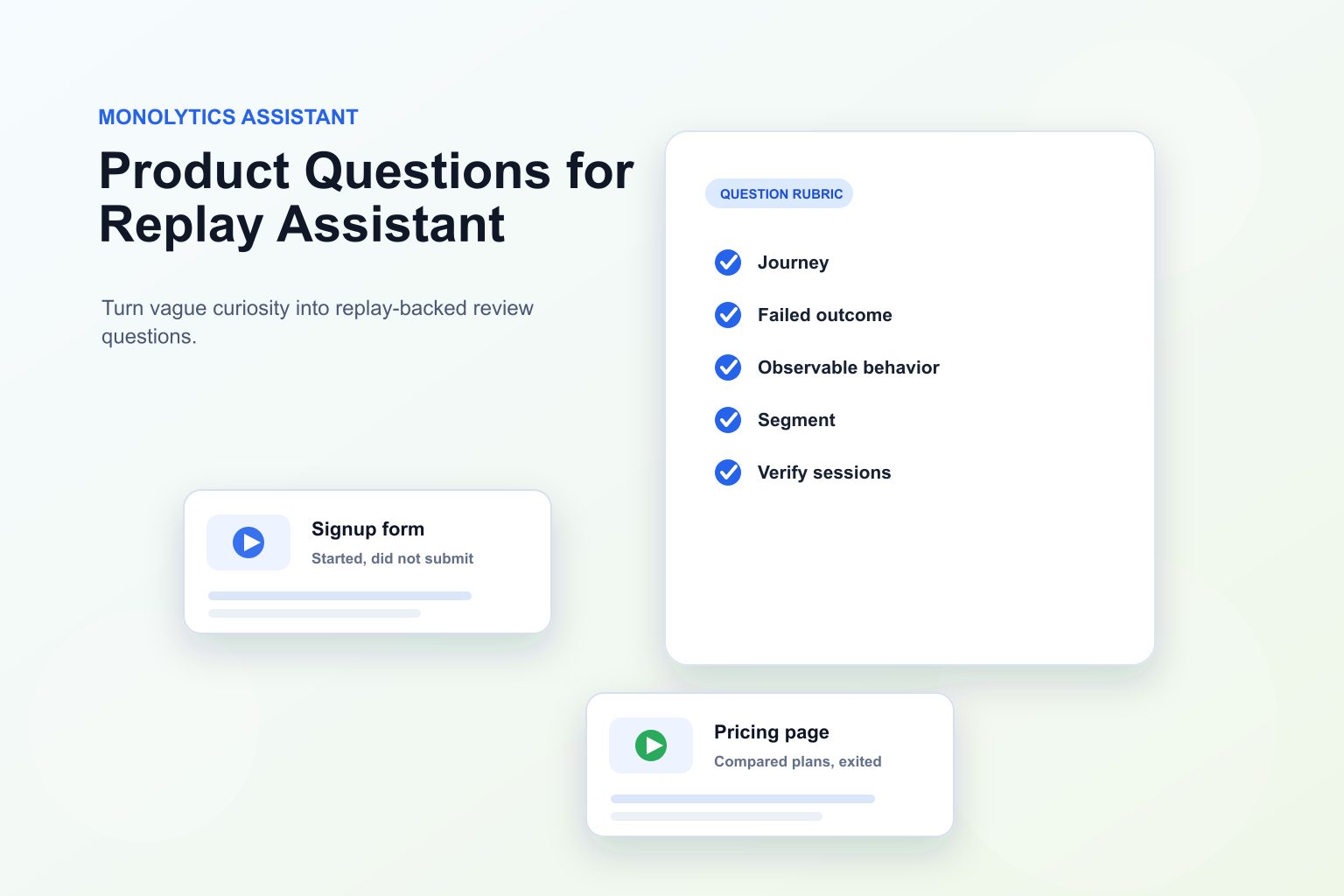
Product Questions to Ask Your Session Replay Assistant
Learn how to ask replay-backed product questions that help AI surface useful sessions without overclaiming user intent or root cause.
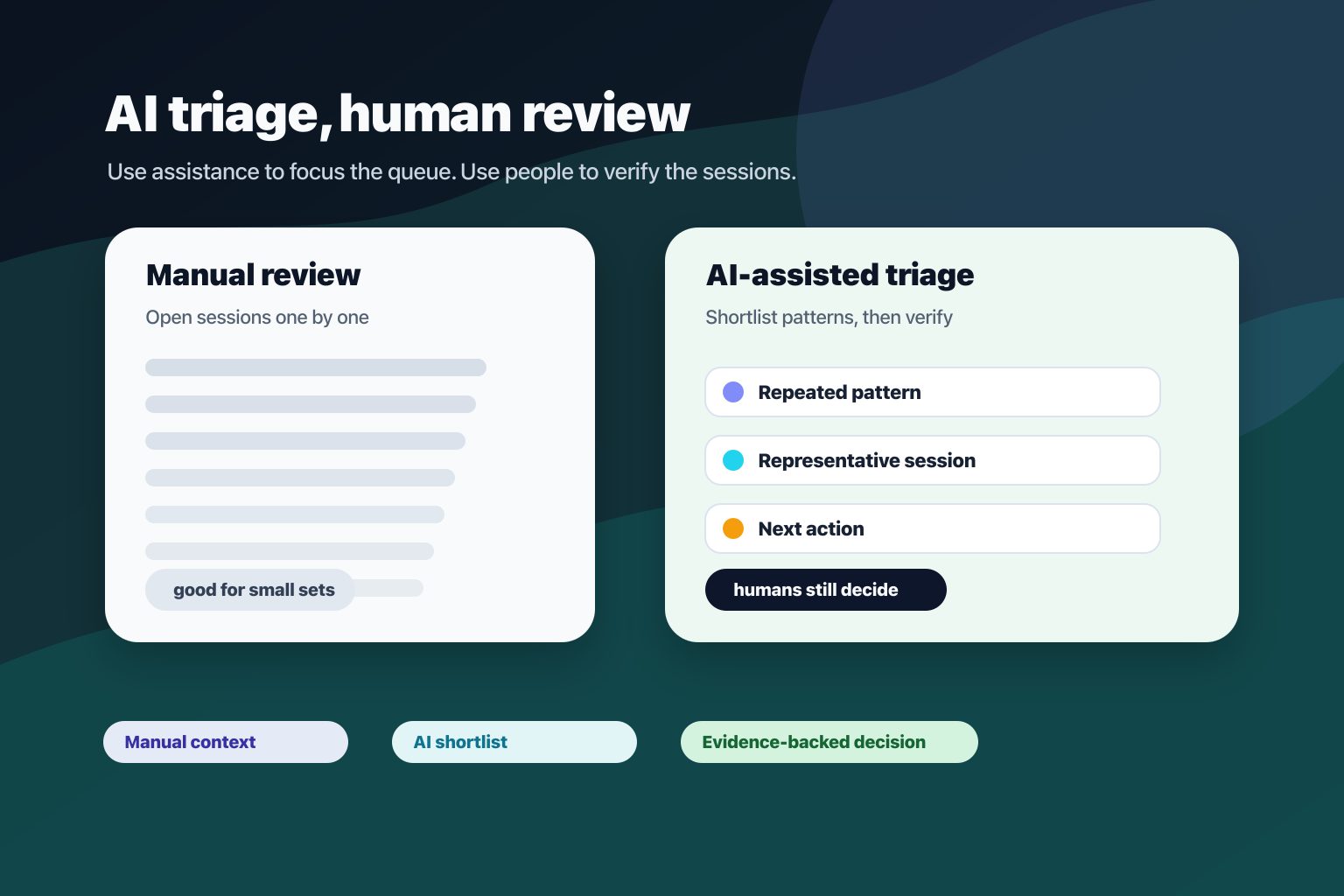
Session Replay AI vs Manual Review: When to Use Each
Compare manual session replay review with AI-assisted replay analysis, and learn when product teams should use each workflow.
Session Replay Assistant Prompts for Product Teams
Use safer session replay assistant prompt patterns for product teams that need evidence-backed findings instead of broad AI guesses.
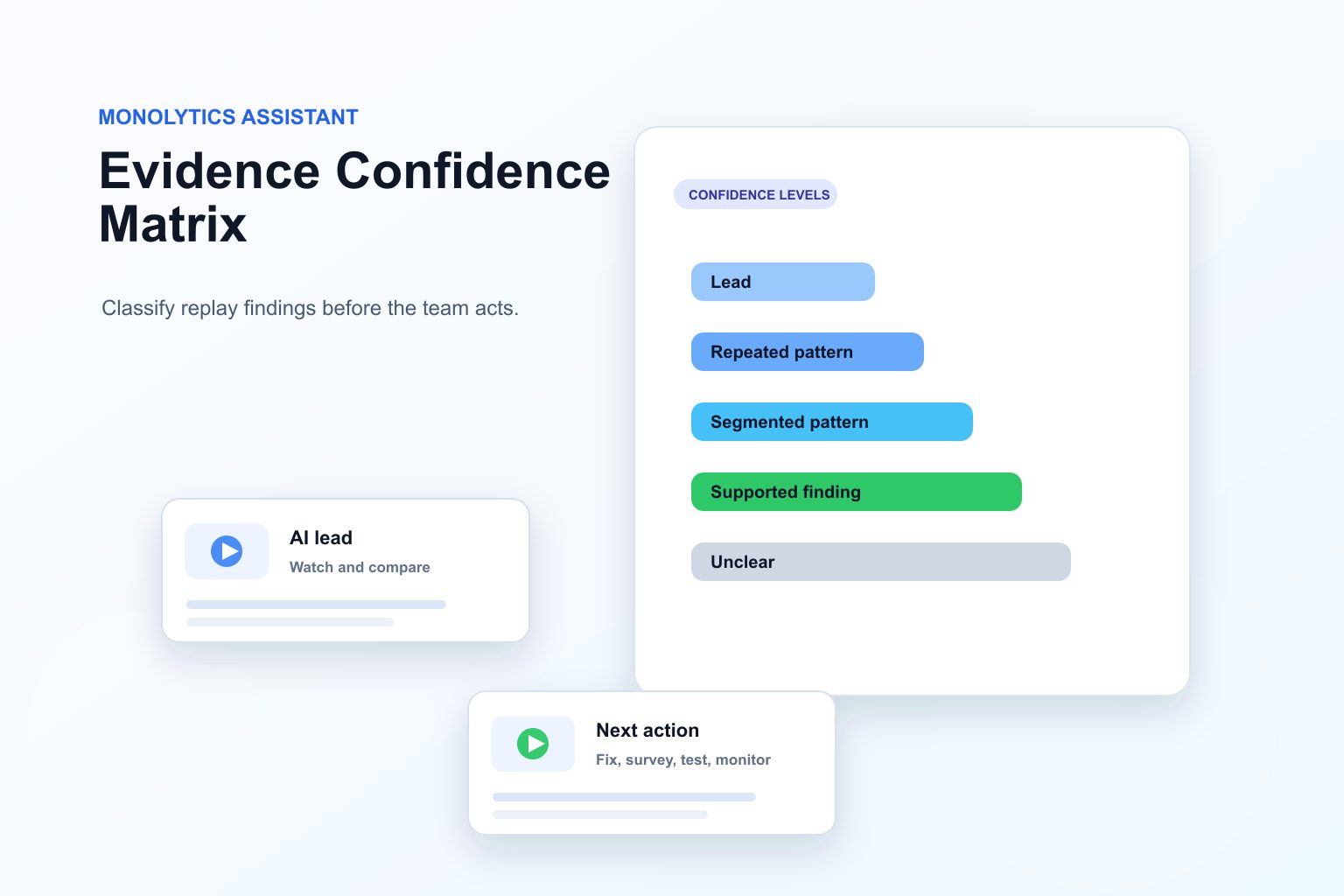
Session Replay Evidence Confidence Matrix
Use this matrix to decide whether an AI-surfaced session replay pattern is a lead, repeated pattern, segmented pattern, supported finding, or unclear result.
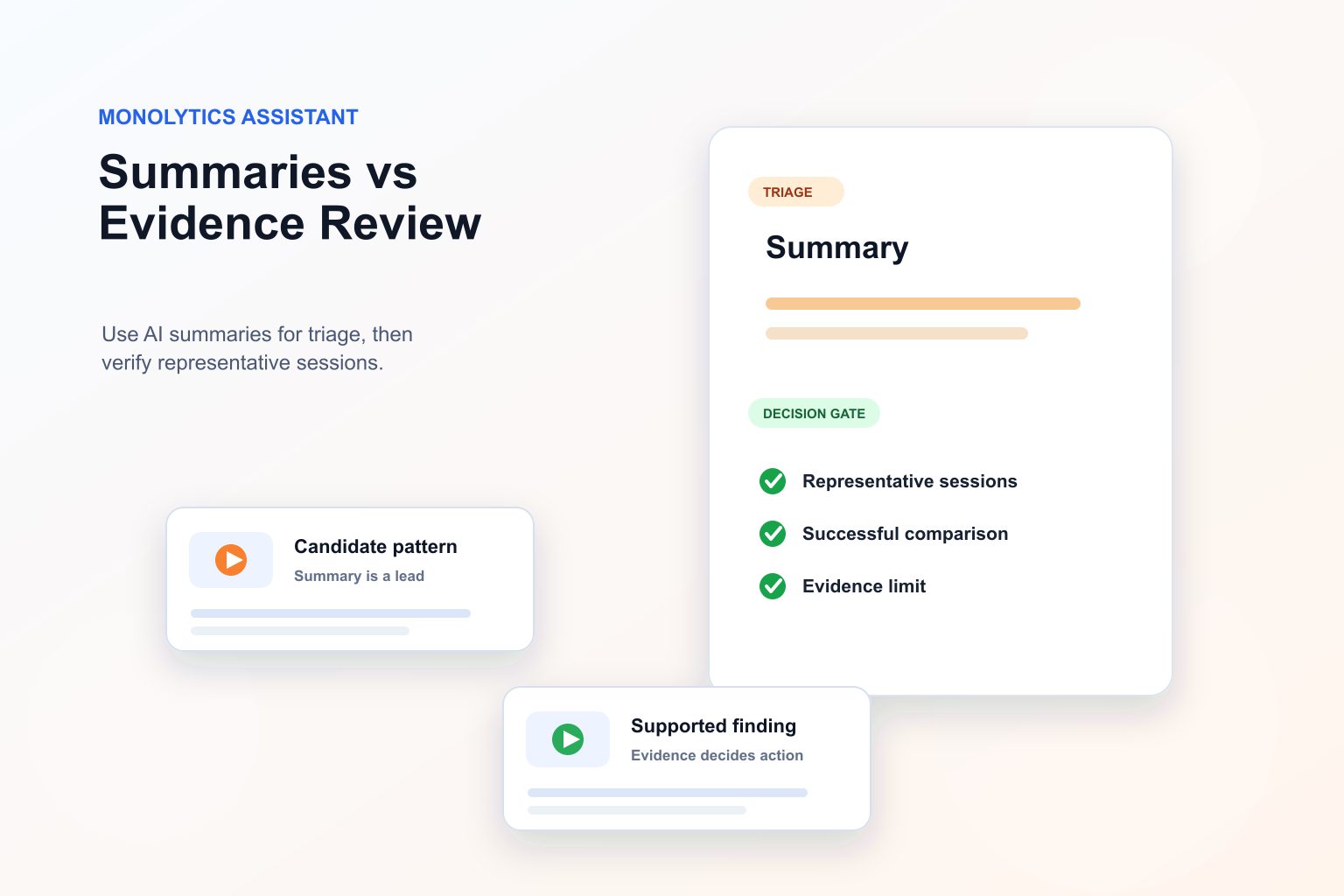
Session Replay Summaries vs Evidence Review
Learn when AI session replay summaries are useful, when teams still need representative evidence, and how to avoid acting on confident but weak findings.
When Not to Trust AI Session Summaries
Learn when AI session summaries are too weak for product decisions and how to turn them into verified replay evidence instead.
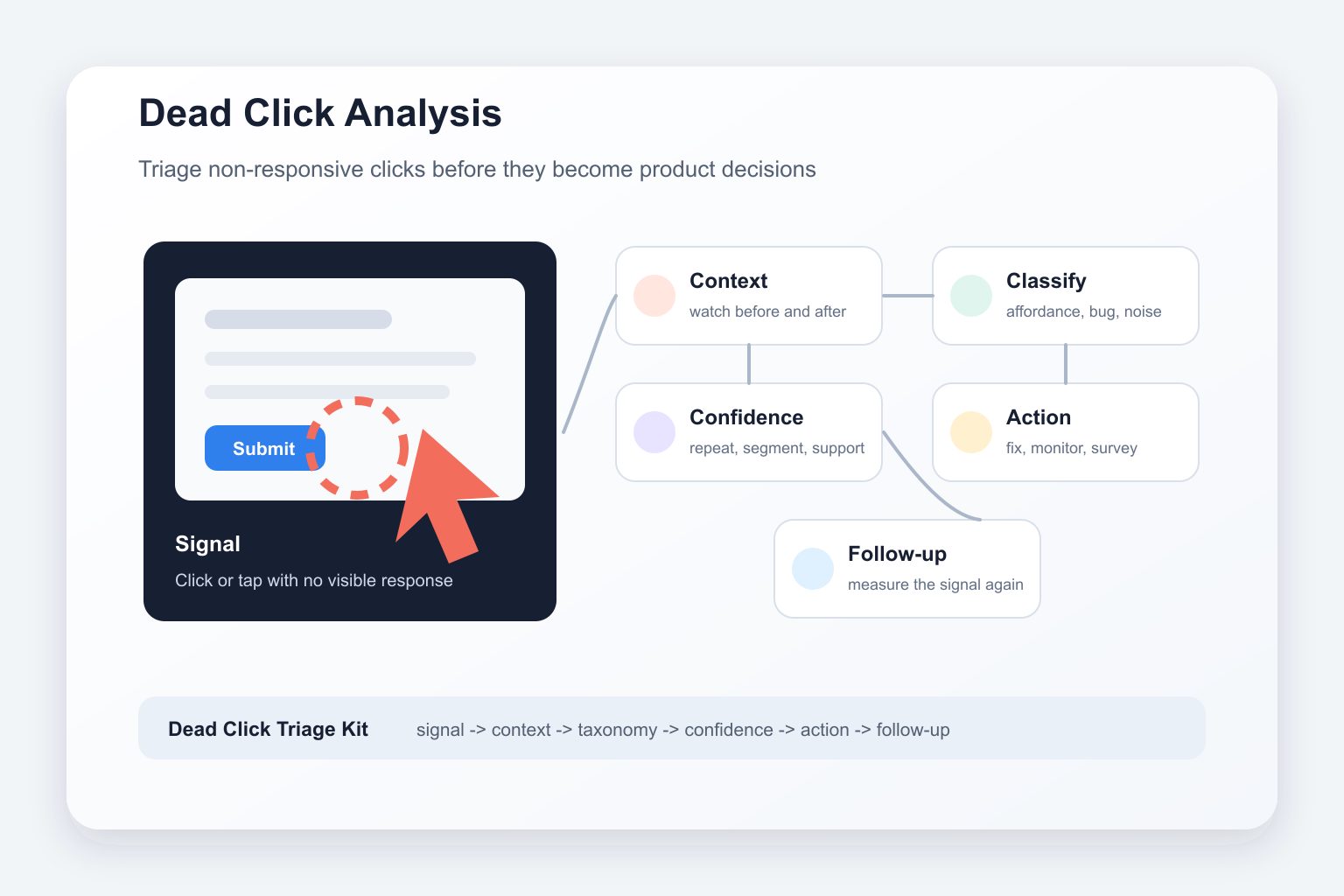
Dead Click Analysis: Triage Non-Responsive Clicks
Learn how to triage dead clicks with session replay, heatmaps, cohorts, and a fix log without treating every non-responsive click as proof of frustration.

Pricing Page Search Intent Report: Brand Demand vs Evaluation Traffic
A first-party GSC report on whether Monolytics pricing and evaluation surfaces currently attract brand, commercial, or problem-research intent.
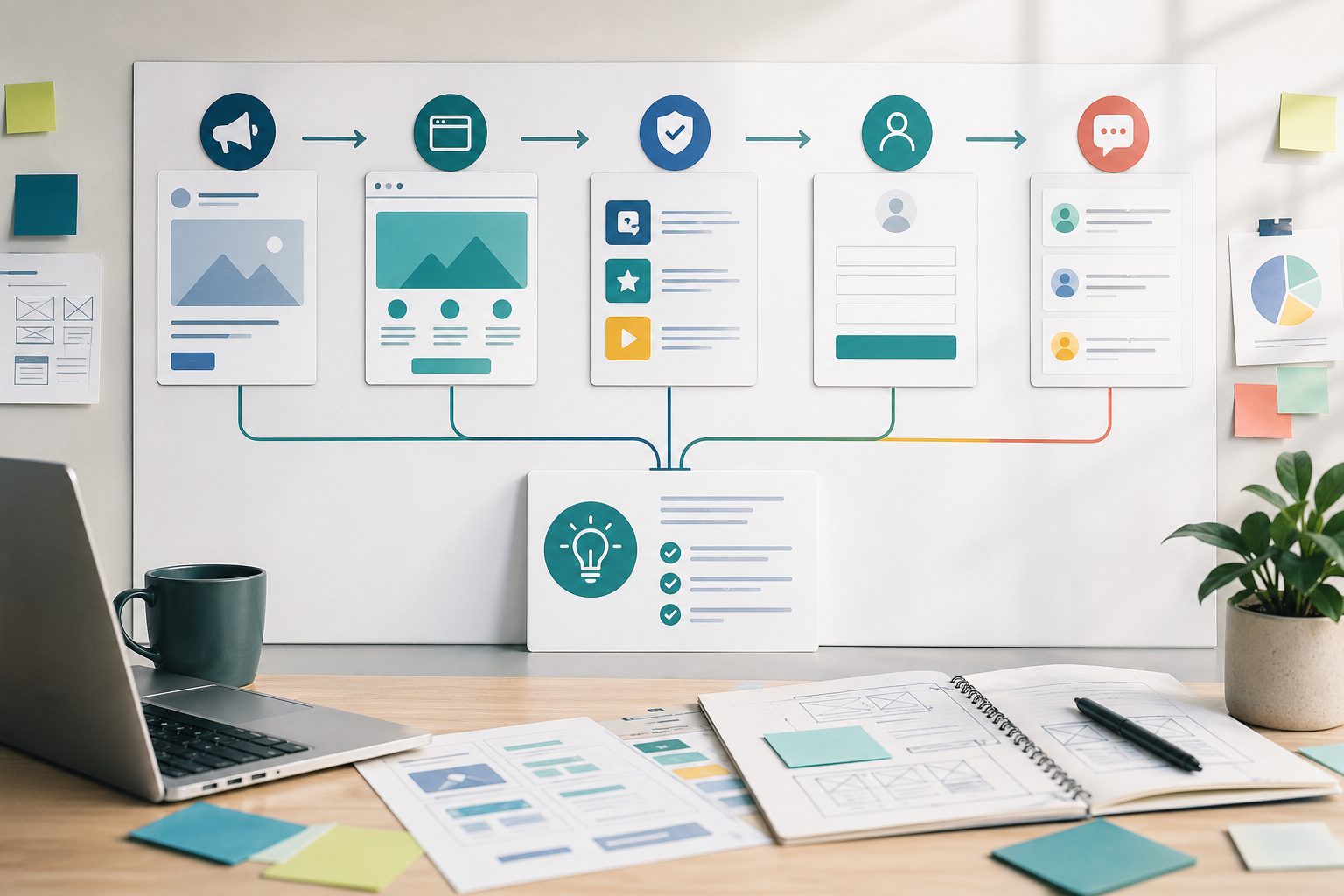
Behavior Analytics for Product Marketing Teams
Learn how product marketers can use targeted session evidence, pattern review, and contextual feedback to diagnose campaign landing page, messaging, proof, and CTA friction.

Pricing Page Evaluation Checklist
Use this checklist to diagnose SaaS pricing-page friction across plan clarity, proof, trust, hidden-cost anxiety, and next-step commitment.


